The need to reduce the risk to human lives in hazardous or hostile environments has driven the development of unmanned, and often autonomous, vehicles in both commercial and military applications. One class of vehicle we expect to be fully automated in the future is the wheeled ground vehicle operating off-road in hostile terrain, such as a battlefield. A typical mission is to drive from point A to point B, avoiding obstacles, while keeping exposure to danger as low as possible.
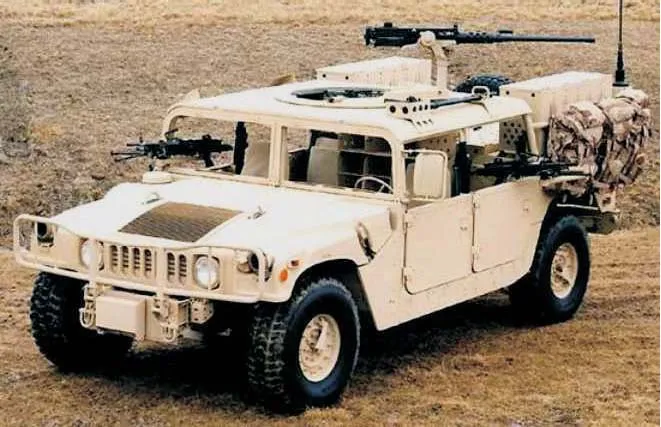
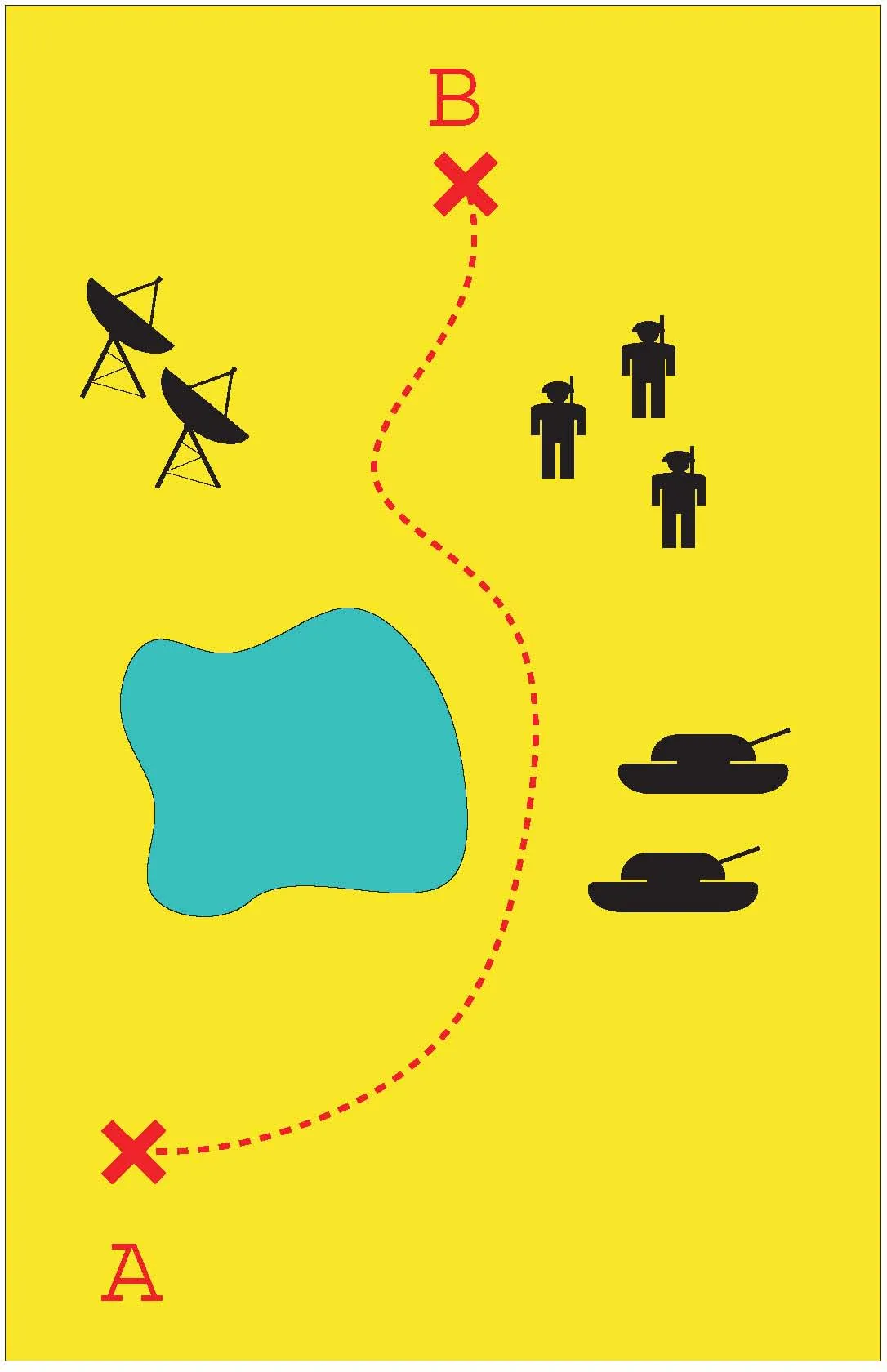 The kind of vehicle the work targets, and the kind of mission it has to carry out: reach the goal while steering around both the terrain and the threats on it.
Keeping exposure low generally means covering the route in minimum time, or at the highest average velocity. The fastest off-road vehicles in the world are found in open-country rally racing, and driving one well takes a great deal of practice and skill. The aim of this project was therefore to develop controllers that behave like intelligent rally drivers, imitating the techniques such drivers use. Those techniques differ sharply from everyday driving, and differ just as much from the techniques used by expert drivers on closed circuits or in Formula 1. What is evident even to an inexperienced driver is that rally driving means operating the vehicle at the limits of its handling capacity.
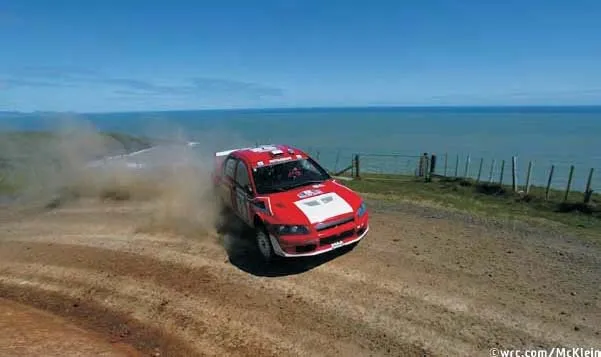 Rally drivers work at the adhesion limit of the tires, and routinely induce a controlled slide to set the car up for the next corner.
Race drivers operate at the adhesion limits of the tires with very slim safety margins. Oversteer, for instance, is an unstable condition: the car is trying to spin, and the spin has to be stopped before directional control can be recovered. Even so, rally drivers deliberately induce a controlled skid through corners to improve their line and prepare the vehicle for the next maneuver. In a clear departure from most of the work reported in the literature at the time, we did not treat slipping and sliding as a nuisance or as an uncertainty to be suppressed. We instead took it to be part of the acceptable operating regime of the vehicle, so that a control algorithm may itself initiate a slide, in a controlled manner, when doing so serves the overall objective.
Operating at the friction limit makes the tire-road contact the central modeling question, since the static friction curves normally used in vehicle simulation do not reproduce what happens during the transients that dominate aggressive driving. Working with the LuGre dynamic friction model, we developed lumped and distributed formulations of tire friction in which the contact patch carries its own internal state, along with an average lumped model that keeps the essential transient behavior at a cost low enough for control design. With those models in hand, the braking problem can be posed and solved as an optimal control problem, which yields the wheel-slip history a braking controller should follow rather than a fixed slip set-point.
The same machinery applies to cornering. For a vehicle negotiating a turn at the handling limit we computed optimal velocity profiles and minimum-time maneuvers, and used them to study the two maneuvers that characterize aggressive rally driving: trail-braking, in which braking is carried deliberately into the corner to rotate the vehicle, and the pendulum turn, in which the car is first swung away from the corner so that the subsequent weight transfer can be used to bring it around. In both cases the optimal solutions reproduce, from first principles, what expert drivers do by instinct.
Sponsors
This project is sponsored by the US Army Research Office.
Movies
Braking with the LuGre dynamic friction model.
A 90 degree turn, minimum time.
A 90 degree turn, maximum velocity.
A 90 degree skidding maneuver.
A trail-braking maneuver, in three dimensions.
A pendulum turn, in three dimensions.
Selected Publications and Presentations
C. Canudas-de-Wit, P. Tsiotras, X. Claeys, J. Yi, and R. Horowitz, “Friction Tire/Road Modeling, Estimation and Optimal Braking Control,” in Nonlinear and Hybrid Systems in Automotive Control, Eds: Rolf Johansson and Anders Rantzer, Lecture Notes in Control and Information Science, Springer-Verlag, London, October 2002, pp. 165-229.